Posts

GS Question of the Week

Why do you think dolls are common haunted objects?

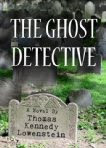
The Ghost Detective Review

Image
Stay Thirsty Media, Inc, June 11, 2010 Kindle, approximately 340 pages Ordering Information: Amazon.com In the closing months of the 20th century, James McParland arrives in Boston to seek redemption. One hundred years earlier, he had joined The Pinkerton Agency and had quickly become its top detective—a man so feared by his opponents that they often committed suicide rather than fall into his hands. Although dead for more than eighty years, McParland’s reputation as “The Great Detective” preceded him as he reappears determined to earn eternal peace by helping the souls of those he tormented in life whose ghosts still walk among the living. Thomas Lowenstein took his passion for turning a wrong in to a right and translated it into his debut novel, The Ghost Detective . I see a lot of promise in this writer. The novel skips around between POVs and time periods, but not so much the reader gets confused or lost. The characters were drawn out. The premise is rather interestin...
The Victoria Hotel

In 1887, John Mckleroy was a partner in the Anniston Land Company, Confederate Veteran, State School Superintendent and a candidate for governor twice. He chose the highest hill on Quintard Avenue to build his home. The Victoria was built in 1888. Mckleroy died in 1894 and his widow continued to occupy the home. That is until William, her son and mayor of Anniston, moved her out while she was on vacation in Florida. He died six months later. The McKleroy family occupied the home for 25 years. In 1920, William McKleroy’s widow sold the house at public auction to William Coleman Wilson. Wilson was president of the Emory Foundry Company. The business produced Anniston's most prominent product, cast-iron pipe. The Wilsons occupied the residence until 1949. Frank and Robbie Kirby became the third owners and last full-time residents. Mr. Kirby was the founder and president of Anniston Electric Company. Mrs. Kirby was a leading musician in the community and entertained guests in what ...

Rose Island

An 18.5-acre island in Narragansett Bay off Newport, Rhode Island, Rose Island allegedly received its name due to appearing like the shape of a rose at low tide. Fortifications were constructed during the American Revolution on island due to its strategic location at the entrance to Newport Harbor. British and colonial soldiers alike used the island to defend Newport. From 1798 to 1800, the U.S. government began constructing Fort Hamilton but never finished it. The U.S. Navy stored explosives during World Wars I and II as part of the Navy Torpedo Station on Rose Island. The government stopped using the land after World War II (except for the lighthouse) and declared it government surplus. Today, the only inhabitants of the Torpedo Station are three species of snakes, plus thousands of nesting birds that are protected by the State. The stone barracks from the fort still remain. Many of these buildings are in danger of collapsing and is considered unsafe for visitors to explore in o...

GS Question of the Week

Why do you think gargoyles and grotesques are placed on Gothic cathedrals and buildings?

Angkor Wat Temple

From Angkor the Khmer kings ruled over a vast domain that reached from Vietnam to China to the Bay of Bengal. The temples of Angkor in Siem Reap, Cambodia were built by the Khmer civilization between 802 and 1220 AD, and represents one of humankind's most astonishing and enduring architectural achievements. More than 100 stone temples still stands today, and are the surviving remains of a grand religious, social and administrative metropolis. Angkor Wat was built by Suryavaram II, and honors the Hindu god Vishnu. Angkor Wat combines two basic plans of Khmer temple architecture: the temple mountain and the galleried temple, based on early South Indian Hindu architecture. It is designed to represent Mount Meru , home of the devas in Hindu mythology. The temple is situated within a moat and an outer wall. 2.2 miles long are three rectangular galleries, each raised above the next. At the centre of the temple stands a quincunx (geometric pattern consisting of five coplanar ...

Colonial Inn

The history of the Colonial Inn extends three century. The original house was built in 1716 as a private residence for the Minot family in Concord, Massachusetts. Captain John Minot was a soldier and physician. It served an important purpose during the Revolutionary War. One of the inn's original buildings was used as a storehouse for arms and provisions in 1775. The British attempted to seize and destroy the town militia's supplies. However, the met the Minutemen on North Bridge on April 19th. This became the first battle in the Revolutionary War known as battle of Lexington and Concord. Owner Dr. Timothy Minot, also a physician tended to the wounded from the battle. In 1889, the Minot house along with two nineteenth-century buildings became an inn. Parts of the establishment were used as variety store and the town's center of commerce during the first half of the nineteenth century. It was also used as a residence. Henry David Thoreau and his family moved in to the in...